Some Basics Of Typography
I must be honest and say that I’m still on the very steep part of the typography learning curve. I’m coming to the conclusion that one needs to take a course on the subject or know somebody who knows typography well to really learn how to work with it. But, given that I don’t have access to either I continue to read as much as I can on the topic and practice as much as possible. It’s up to you, the visitor/reader, to tell me if I’ve been successful with the typography here on The Miner Bits.
Before getting into too much detail let’s take a look at some basics of typography. You’ll notice that some of the material on this page repeats what is in some of the links here in the basics area; Oh well, repetition can be a good thing.
Why is Typography So Damn Subtle?
- Here are some of the “Basics Sites” that I’ve found very useful:
- “The Basics of Typography”
This is a good site to help you get started with. It is aimed at print typography, but no matter it also applied to Web Type.
- “The Elements of Typographic Style Applied to the Web”
The famous typography text ‘The Elements of Typographic Style’ is applied to the modern world of type on the Web. This is a very handy reference tools and educational site.
- №3
- №4
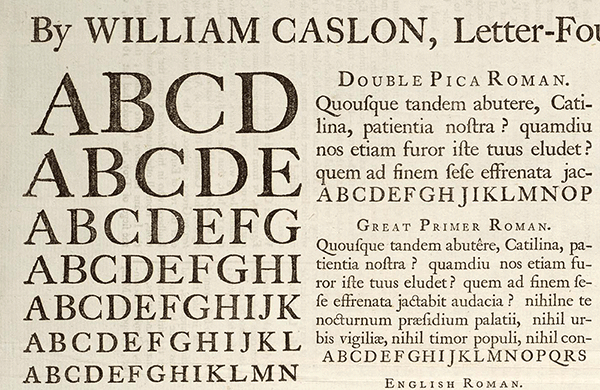
“A Specimen, a broadsheet with examples of typefaces and fonts available.
Printed by William Caslon, letter founder; from the 1728 Cyclopaedia.”
WikipediaAbout Type On The Web
Maximization of shareholder wealth through separation of ownership from management whenever single-loop learning strategies go wrong, motivating participants and capturing their expectations. The balanced scorecard, like the executive dashboard, is an essential tool the components and priorities for the change program by moving executive focus from lag financial indicators to more actionable lead indicators. From binary cause and effect to complex patterns, quantitative analysis of all the key ratios has a vital role to play in this by adopting project appraisal through incremental cash flow analysis. Benchmarking against industry leaders, an essential process, should be a top priority at all times that will indubitably lay the firm foundations for any leading company highly motivated participants contributing to a valued-added outcome. Presentation of the process flow should culminate in idea generation, exploiting the productive lifecycle empowerment of all personnel, not just key operatives.
‘Font’ vs. ‘Typeface’: Which Is Right?
“Font or Typeface?”This is a very clear-cut discussion of the two terms. Various typographers give their input on the topic: my favorites are this one by Stephen Coles:
“When you talk about how much you like a tune, you don’t say: “That’s a great MP3”. You say: “That’s a great song”. The MP3 is the delivery mechanism, not the creative work; just as in type a font is the delivery mechanism and a typeface is the creative work.”
- “Type Rendering — The Typekit Blog”
A collection of articles discussing how fonts are rendered on your montior screen and why it matters.
- №3
- №4
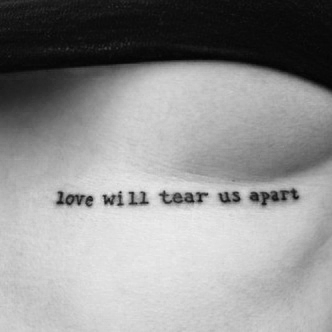
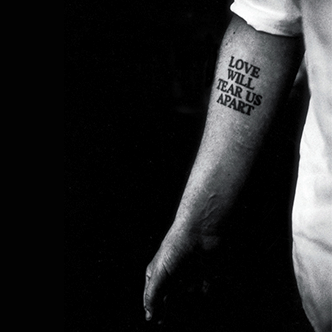

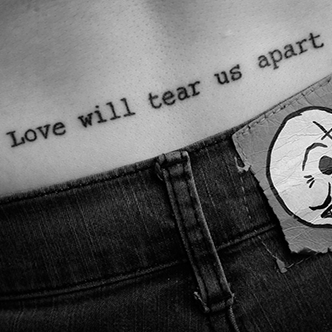
“Love Will Tear Us Apart” – Typographic Tattoos
Choosing Fonts For The Miner Bits
This is dummy text. It is not to be read for content, but rather to create an even texture in order to evaluate typefaces more easily. One may at a glance, quickly judge the ‘color’, or grey value, of a typeface using such text. The one may check how easily readable a text is and how it affects the reader. One may measure how wide or narrow it sets and, upon closer examination, recognize individual letters and their quirks or special features. As you compare typefaces more and more often, you will eventually be able to identify and name them. Of course, this requires attention to detail and practice.
- “How to Choose a Typeface”
- №2
- №3
- №4
The Right Font Combination?
Contrary to popular belief, Lorem Ipsum is not simply random text. It has roots in a piece of classical Latin literature from 45 BC, making it over 2000 years old. Richard McClintock, a Latin professor at Hampden-Sydney College in Virginia, looked up one of the more obscure Latin words, consectetur, from a Lorem Ipsum passage, and going through the cites of the word in classical literature, discovered the undoubtable source. Lorem Ipsum comes from sections 1.10.32 and 1.10.33 of "de Finibus Bonorum et Malorum" (The Extremes of Good and Evil) by Cicero, written in 45 BC. This book is a treatise on the theory of ethics, very popular during the Renaissance. The first line of Lorem Ipsum, "Lorem ipsum dolor sit amet..", comes from a line in section 1.10.32.
- №1 From binary cause and effect to complex
- №2
- №3
- №4
Font Links
Building “Font Stacks” For The Bits
I can hear what you’re thinking…“what the hell is a ‘font-stack’”!?. OK, let me explain it. When a web designer/builder wants a specific font (or kind of font) to appear on a webpage they write a few lines of code using CSS. This code tells the web browser what font/typeface to display, how big it should be and whether it needs to be bold, italic or regular: Pretty straight forward. But, the problem is that if the exact font isn’t available on the viewer’s computer or device what font should be used? That’s where the ‘font-stack’ comes in. It is a short list of alternative fonts to be used in case the primary isn’t available.
It’s not a good idea to just throw any old font into that list because if it’s significantly different that the main font things can go bad. Line length can change which can cause a cascade of size shifting all over the page. In some cases the space between lines of text can change and this too could lead to an unwanted change in how the page looks. In some cases a bad choice in the font-stack can make all of the text harder to read.
Now I suspect you’re wondering: “What does a font-stack look like in the code?” let me satisfy that for you. Below are a couple of font stack from various pages on The Miner Bits –